Global fossil CO2 emissions set to dip in 2026, carbon budget finds
The Global Carbon Budget projects a 0.4% fall in fossil CO2 this year, driven by an oil shock and clean energy growth. Total emissions still rise because of fires and deforestation.
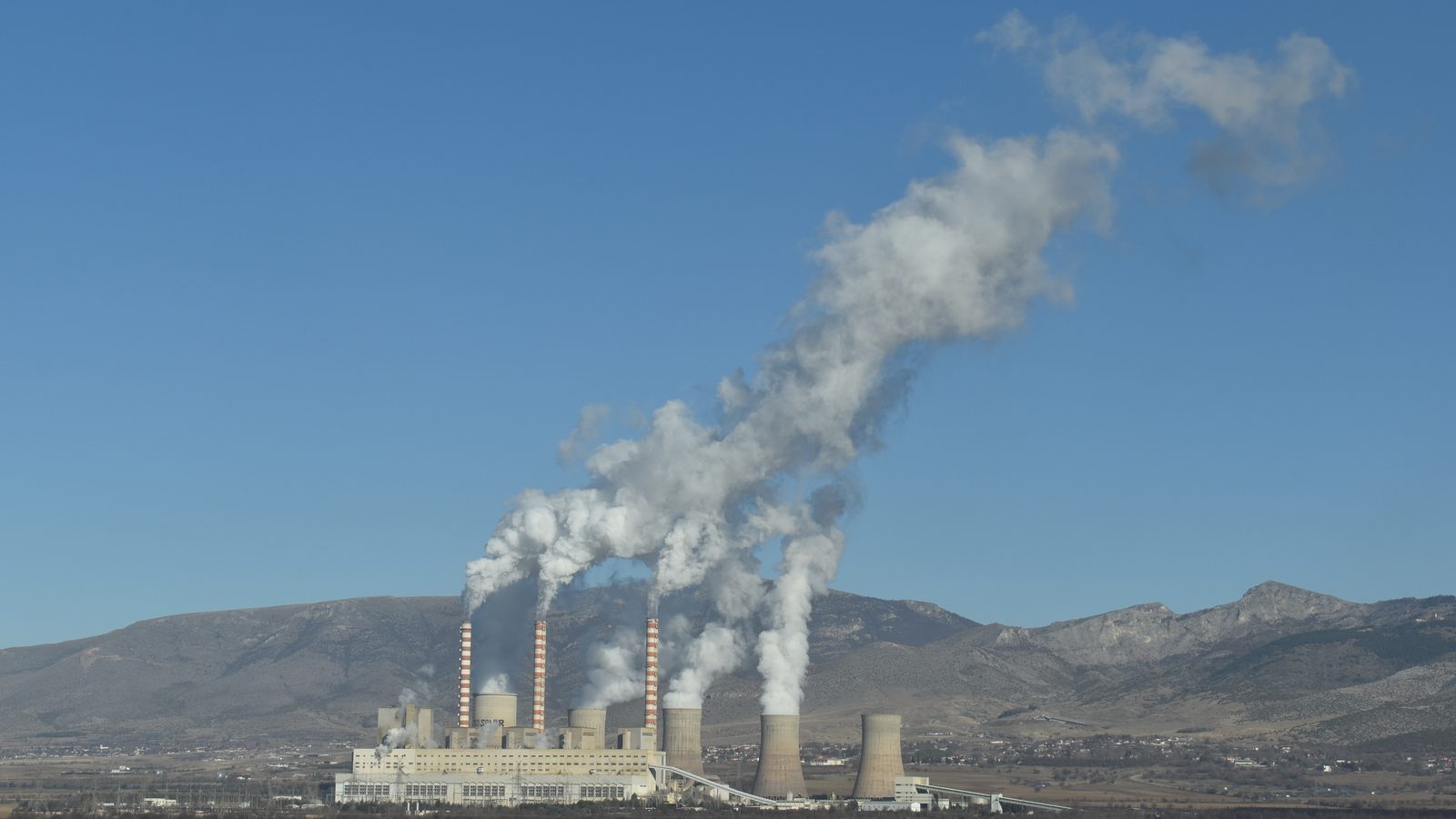
Global carbon dioxide emissions from fossil fuels are projected to fall slightly in 2026, according to the annual Global Carbon Budget released on November 10 by an international team of more than 140 scientists. The report puts this year's fossil emissions at 38.2 billion tonnes, a decline of 0.4% from 2025. The researchers caution that the drop is partly the result of a geopolitical energy shock rather than a lasting shift, and that total CO2 emissions, including those from land use, are still projected to climb.
The findings were published as a preprint in the journal Earth System Science Data, with a companion paper in Nature Climate Change. The project is led by Pierre Friedlingstein of the University of Exeter.
What is driving the decline
The fall is concentrated in oil, which is projected to drop 1.9%. Natural gas emissions are expected to edge down 0.3%, while coal is projected to rise 0.6%. The authors describe the oil decline as a likely short-term response to the energy shock from the Iran conflict, which raised prices and constrained supply. At the same time, solar power, wind power and electric vehicles are now meeting about two-thirds of the growth in global energy demand, though the researchers say that is not yet fast enough to guarantee a lasting decline.
The report estimates that solar and wind avoided 4.1 billion tonnes of CO2 in 2025 and are on course to avoid 4.6 billion tonnes in 2026. Over the past decade, total CO2 emissions grew about 0.3% a year, compared with 1.7% a year in the decade before, a sign that growth has slowed considerably even before this year's dip.
Country by country
Most large emitters are projected to cut fossil emissions this year:
- China, the largest emitter, is projected to fall 0.9%, with coal up slightly and oil down sharply.
- The United States is projected to fall 1.3%, mainly because of lower coal use.
- The European Union is projected to fall 1.5%, and Japan 1%.
- India is the main exception, with emissions projected to rise 4.4%, faster than its average of 3.5% a year over the past decade.
- The rest of the world combined is projected to fall 0.7%, and international aviation and shipping are each expected to drop about 1%.
Why total emissions still rise
Fossil fuels are only part of the picture. Emissions from land-use change, such as deforestation and fires, are projected to rise to 5.1 billion tonnes in 2026. The report links that increase to peat fires and forest degradation in Southeast Asia during El Niño conditions. As a result, total CO2 emissions are projected to reach 43.3 billion tonnes, up from 42.8 billion tonnes last year.
Atmospheric CO2 is projected to reach 427.7 parts per million in 2026, about 54% above pre-industrial levels. The report says the land carbon sink, which had weakened during the 2023-24 El Niño, recovered to earlier levels, but the strong El Niño developing this year is expected to affect it significantly next year.
The authors also note how small engineered carbon removal remains: so-called novel carbon dioxide removal, such as direct air capture, currently offsets less than 30 minutes' worth of annual fossil emissions.
The 1.5C budget is nearly gone
The team estimates that the remaining carbon budget for limiting warming to 1.5C is about 150 billion tonnes of CO2. At current emission rates, that would be used up in less than four years.
The scientists stress that a one-year decline should not be mistaken for a peak. Glen Peters of the CICERO climate research center said a drop "is not a peak unless it is driven by structural change." Friedlingstein argued that the durable answer is faster deployment of clean energy technologies, while Corinne Le Quéré of the University of East Anglia said further acceleration could turn global emissions around within a few years.
Why it matters
The Global Carbon Budget is one of the most widely cited annual snapshots of where emissions stand, tracking both fossil fuels and the natural sinks that absorb carbon. This year's numbers offer a mixed message: fossil emissions in most major economies appear to be flattening or falling, yet the gap between current emissions and the cuts needed to meet the Paris Agreement's tightest goal remains wide.