Pope Francis's private diary describes three encounters with the devil
The Vatican has published diaries and notes Francis kept from 1992 to 2024. They describe visions he took to be physical, a spiritual crisis in 2021-22 and a plan he dropped to ordain married men.
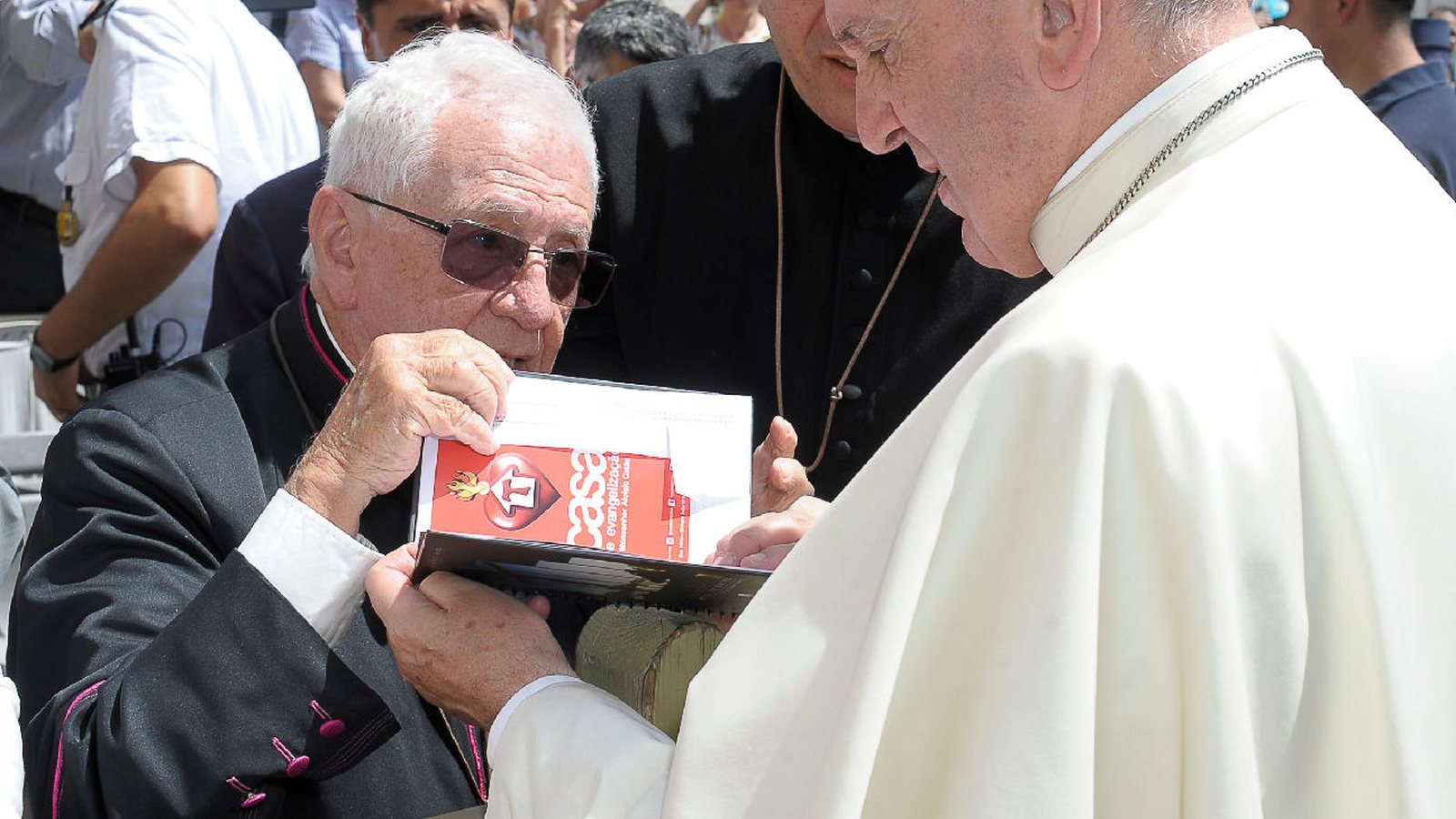
The Vatican's publishing house released The Private Diary of Pope Francis on Tuesday, and and its most striking passages are the late pope's plain accounts of the devil. In notes spanning 1992 to 2024, Francis describes three episodes in which, in his words, he does not doubt that the devil "appeared physically." The book also covers a spiritual crisis he went through in 2021 and 2022, when he was already pope.
Francis died on April 21, 2025. Before his death he handed the notebooks to Cardinal Víctor Manuel Fernández, the Argentine head of the Vatican's doctrine office, who compiled the volume and is listed as its author. Pope Leo XIV later approved studying and publishing the material, according to PBS NewsHour.
What the diary is
The core of the book is a leather-bound calendar that Francis used as a notebook. It begins in 1992, when he was an auxiliary bishop in Buenos Aires, and ends with an entry dated Aug. 18, 2024. Euronews reports that the book gathers diaries, notes and other documents from those years, and that it is being published in five languages across 94 countries.
Fernández says the diary says little about the day-to-day business of running the Church. He left out entries that touch on third parties. Some of Francis's most private thoughts, he says, are written in a code nobody can read, and those are not reproduced. Fernández also admitted he had doubts about publishing the writings at all, out of concern for upsetting people.
The three encounters
Francis wrote: "I recalled three definite episodes in which I do not doubt that he appeared physically." As Euronews summarizes them:
- Buenos Aires, as a bishop. He saw the devil through a car window and remembered eyes that were both threatening and seductive.
- Argentina, a second time. He described eyes of fire, then fled while gripping a rosary and praying to the Virgin Mary.
- January 2021, as pope. During a meeting he heard the devil's triumphant voice and left the room, which he said freed him.
PBS NewsHour quotes the January 24, 2021 entry, in which Francis recalls the devil saying, "Now I've gotten everything I wanted." After his 2018 trip to Chile, which came amid the Church's abuse scandal, he wrote that he "saw the entrance to hell." He later called the abuse scandal "the gates of hell."
A crisis at the top
Fernández describes a spiritual crisis that ran from 2021 to 2022. He links it to temptations toward omnipotence and the exercise of power, and Euronews quotes him calling it a "pagan seduction." He stressed that the temptation was internal, not abusive, and that Francis was austere rather than driven by pleasure.
PBS places the crisis against a hard stretch for the pope: a Vatican financial investigation and health problems, including surgery in July 2021. According to the diary, Francis worked through it by entrusting himself to God's mercy, and by Dec. 30, 2022 he appeared to have come out the other side. Fernández says two teaching documents from 2023 and 2024, on God's merciful love and on the love of Christ, were shaped by that period.
Euronews adds that Francis also credited the Virgin Mary with helping him resist temptation, including during an October 2023 pilgrimage to Fatima.
Married priests and a harsh reaction
Not every outlet covers the same material. In its account, Euronews reports that Francis wanted to allow the ordination of married men as priests but wanted to avoid open conflict inside the Church. Fernández told the outlet that a document allowing blessings for same-sex couples had already drawn a very harsh reaction. Euronews also says Leo XIV has partly moderated some of his predecessor's innovations. PBS's account does not mention the married-priest plan, so that detail rests on the Euronews report alone.
Fernández also said Francis never returned to Argentina as pope partly because of intelligence suggesting far-right groups were planning something against him.
A long tradition of posthumous papers
Publishing a pope's private writing after his death has precedent. PBS notes that John XXIII's Journal of a Soul appeared in 1960, and that John Paul II's notes were published in 2014 even though he had wanted them burned.
Francis's own record in Argentina is part of the backdrop. Euronews notes that he was accused of being harsh with subordinates and of misusing power while Jesuit provincial from 1973 to 1979 and while Archbishop of Buenos Aires from 1998 to 2013. Leo XIV has described Francis as a "great shepherd and an irreproachable man."
What the Vatican has said
Beyond Fernández's introduction and Leo XIV's approval of the project, neither PBS nor Euronews reports an official Vatican statement on the book. Fernández said Francis's most confidential thoughts stay in code, so some of what the pope wrote will not become public.