Stocks enter correction as Nasdaq erases 2026 gains: why
The S&P 500 and Dow are now in correction territory and the Nasdaq has given up its 2026 gains. Here is what is driving the AI-led sell-off and what experts say to do.
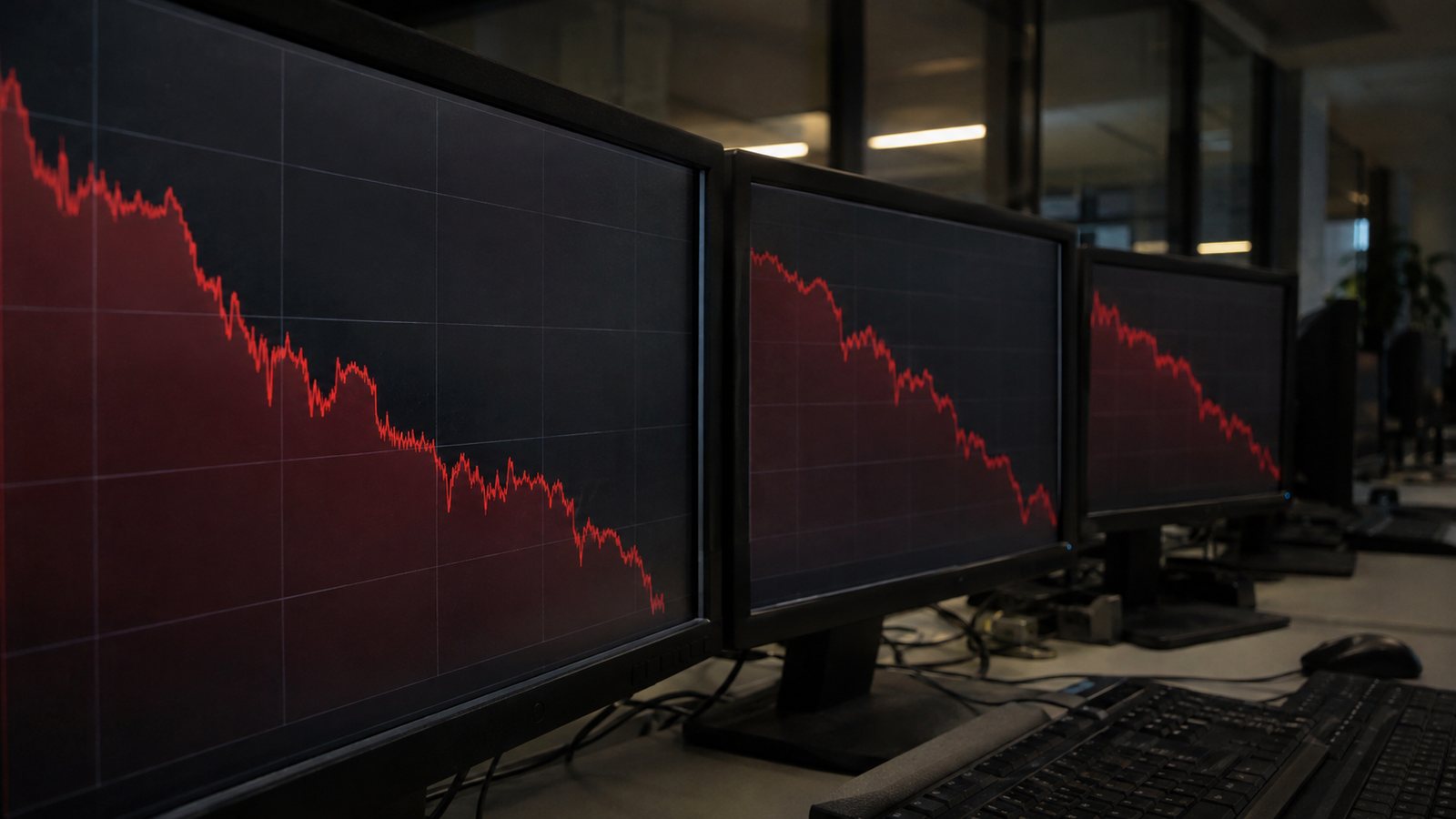
Wall Street had its worst day of the year on Friday, November 20, as a deepening rout in technology stocks pushed the S&P 500 and the Dow Jones Industrial Average into correction territory and wiped out the Nasdaq's gains for 2026. The sell-off came one day after Anthropic's record-breaking stock market debut.
The numbers
According to CBS News, the Nasdaq Composite fell 1,261 points, or 5.3%, to close at 22,618, its second-worst day of 2026. The S&P 500 dropped 3.7% and the Dow fell 1.9%. A correction means an index is more than 10% below its recent high. CBS said the S&P 500 was on track for a seventh straight daily loss, its longest losing streak since February 2020. PBS NewsHour reported that the Dow fell more than 900 points.
Chipmakers Advanced Micro Devices and Broadcom led the losses. Nvidia fell about 13% in late trading, per CBS, and has dropped on nine of the last ten sessions. It has lost more than 25% since the scandal that ended with co-founder Jensen Huang leaving as CEO earlier this month.
Not everything fell. CBS noted that most non-tech stocks rose, including General Mills (up 4.4%) and homebuilder Lennar (up 2.5%).
Anthropic's IPO hangover
Anthropic's Thursday Nasdaq debut had been a headline event. By Friday the stock was down 9.3% at $88.14, still above its $83 IPO price but about 23% below the brief peak of $115.10 it hit the previous day, CBS reported.
Six reasons stocks are falling
CBS News laid out six factors behind the slide:
- Doubts that AI spending will pay off. Investors worry the huge outlay on data centers may not produce matching returns. Anthropic has grown revenue quickly but reported losses of about $104 billion for the first nine months of 2026, CBS said.
- Possible limits on data centers. Democrats are expected to control Congress from January, and investors fear laws that restrict data center construction.
- Higher interest rates. The Federal Reserve is expected to raise rates in December because inflation is well above its 2% target. Chicago Fed President Austan Goolsbee said the evidence does not suggest a return to 2% without action.
- A chip export crackdown. The Commerce Department is moving to restrict sales of advanced AI chips to China, and analysts say the impact on the chip industry is larger than expected.
- The Iran conflict and oil. Reports that the US and Israel may consider a new assault on Iran raise the risk of higher oil prices and more inflation.
- Shutdown risk. Lawmakers must extend federal funding by December 11 to avoid a shutdown, and disputes over Iran war funding could complicate a deal.
What experts say
Analysts quoted by CBS framed this as an AI sell-off rather than a broad economic collapse. Michael Antonelli of Baird said the notion that AI spending can keep growing without limit and keep supporting prices is ending, though he does not think the bull market that began in October 2022 is over. Chris Larkin of E*TRADE from Morgan Stanley said US economic and business fundamentals remain solid, and noted that only five of the past 15 corrections since 1983 became bear markets, which are declines of 20% or more.
Nobody quoted could say when the sell-off will stop.
What it means for ordinary investors
If you hold a 401(k) or index funds, you own these companies through the S&P 500, where big technology firms carry heavy weight. A few points from the experts:
- Avoid panic selling. CBS cited advisers who warn that selling after a drop can lock in losses. Investors who sold in February 2020 missed a strong recovery.
- Check your mix. If a falling tech sector has pushed you well beyond the risk you intended, that is a reason to review your allocation, not to trade on headlines.
- Watch the December dates. The Fed meeting and the December 11 funding deadline are the next events that could move markets.
Analyst Dan Ives argued selling now would be "the wrong move" given his view that the AI shift will play out over several years. Others are more cautious. A correction is common, and what comes next is uncertain.