How to tell if a Black Friday deal on Amazon is really a deal
A big red percentage is not proof of a bargain. Here is how to read Amazon's List Price and Typical Price labels, check price history and spot the discounts that only look good.

The quickest way to tell whether a Black Friday deal is real is to ignore the percentage and look at the price history. If the item sold at the same "sale" price several times this year, the deal is ordinary. If the price is clearly below anything it has reached in the past few months, it is worth buying now.
Everything else in this guide is about getting that answer fast, and about reading the labels Amazon puts next to the price. Amazon's Black Friday Week runs from November 19 to November 30, 2026, so you have 12 days to do it.
Why the percentage can mislead
A discount is always measured against a reference price. The question is which one. A "50% off" badge means very little if the reference price is one the item rarely sold for.
US rules on this are old but clear. The Federal Trade Commission's Guides Against Deceptive Pricing (16 CFR 233.1) say a former price is a fair basis for a comparison only if it is "the actual, bona fide price at which the article was offered to the public on a regular basis for a reasonably substantial period of time." A price that is inflated for a short time so that a later markdown looks impressive is, in the FTC's word, "fictitious."
Retailers are not supposed to do this, but the safest assumption as a shopper is that the reference price needs checking.
Read Amazon's price labels
On Amazon, the crossed-out price next to a deal is one of two kinds of reference price. Amazon explains them like this:
- List Price. Also known as the manufacturer's suggested retail price (MSRP). Amazon says it is "a validated price customers can find on Amazon and at other retailers." It is submitted by sellers, manufacturers or suppliers and then checked by Amazon.
- Typical Price (sometimes shown as the "Was" price). The median price customers paid on Amazon over the last 90 days, not counting prices paid during limited-time deals.
The Typical Price is usually the more honest comparison, because it reflects what people actually paid recently. A List Price can be accurate and still be a price almost nobody pays: many electronics sell below MSRP most of the year.
Amazon also says it aims for its deals to be the lowest price on the item "in at least the last 30 days." That is a useful floor, but 30 days is short. An item that was cheaper during an earlier sale this year can still qualify.
Check the price history
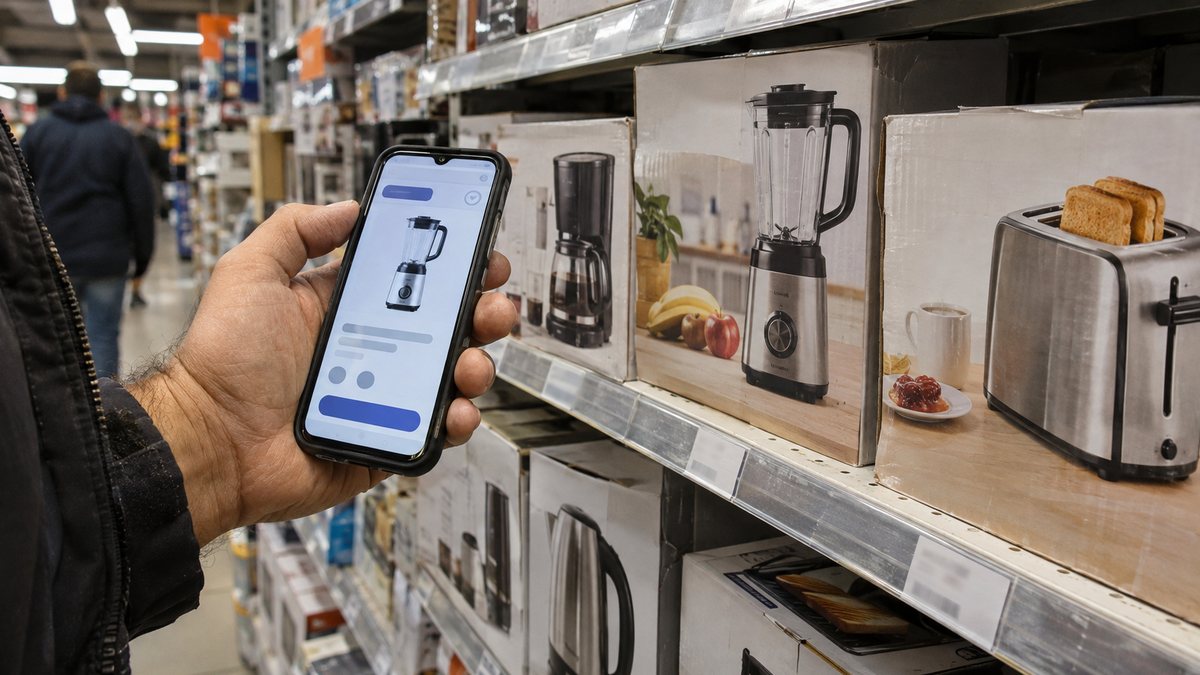
This is the step that settles most questions.
On Amazon itself
Amazon now shows price history on eligible product pages, with views of the last 30, 90 or 365 days. Look for the price history link next to the price, or ask Amazon's shopping assistant, Alexa for Shopping (the former Rufus), something like "Is this the lowest price?" Amazon says the feature is available in the US and several other countries.
Use the 365-day view. It shows whether the current price is a genuine low or a price the item hits every few weeks.
With Keepa or CamelCamelCamel
Two independent tools have tracked Amazon prices for years and are worth using as a second opinion:
- Keepa adds a price-history chart directly to Amazon product pages through a browser extension, and can send an alert when the price drops below a level you choose.
- CamelCamelCamel shows price-history charts on its own website, lets you set email price alerts, and offers a browser extension.
Both separate Amazon's own price from third-party sellers' prices, which matters: a deal from Amazon and a "deal" from a little-known marketplace seller are not the same thing.
A five-minute checklist
Before you click "Buy now," run through these:
- Look at the 90-day and 365-day price history. Is today's price clearly lower than the usual range?
- Check which reference price is crossed out. A discount from the Typical Price is more meaningful than one from the List Price.
- Compare the exact model. Black Friday is full of near-identical versions of products: a TV or laptop with a slightly different model number, older chip or less storage. Match the full model number before comparing prices across stores.
- Check the seller. "Ships from and sold by Amazon" is the simplest case for returns and support. For third-party sellers, look at the seller's rating and return policy.
- Ask whether you would buy it without the badge. A deal on something you do not need is not a saving.
Lightning Deals and Prime-only deals
Lightning Deals are limited-time offers on a set number of units. The deal page shows a countdown and how much of the stock has been claimed. They create urgency on purpose, so check the price history before reacting to the timer. Popular items often come back as a Lightning Deal more than once during a long event.
Prime-exclusive deals are offers only Prime members can get. If you are not a member, factor in that the deal requires a membership, even if you use the free trial and cancel later.
Amazon's Today's Big Deals drops, one themed set of offers per day during the event plus two drops on Black Friday and Cyber Monday, also run "while supplies last." The same rule applies: a short window is not proof of a low price.
Use the return window as a safety net
Amazon's holiday return policy gives you room to change your mind. Most items bought between November 1 and December 31, 2026 can be returned through January 31, 2027. Apple-brand products must be returned by January 15, 2027. Amazon has told sellers the extended window will apply every year.
That has a practical use beyond gifts. If you buy early in the event and the same item drops further later, returning it and buying it again at the lower price is often possible within the window. Keep in mind that items from third-party sellers follow the seller's own conditions for what can be returned, and some categories have their own restrictions.
Signs a deal is probably not worth it
- The 365-day chart shows the "sale" price many times this year.
- The price jumped shortly before the event and then came back down.
- The only comparison is a List Price, and the Typical Price is close to today's price.
- The product is a lesser-known variant of a famous model, with a model number you cannot find elsewhere.
- The seller is new, has few ratings or has a short or unclear return policy.
The bottom line
A real Black Friday deal is one that beats the item's own recent history, not one with the largest percentage. Check the 365-day price chart, prefer discounts measured against the Typical Price, confirm the exact model and seller, and rely on the January 31 return window if a better price shows up later.